7 Reasons Your Night Cream Is Ageing You Faster (And The Fix K-Beauty Found)

If you've been layering serums, retinol, and night creams for months with barely anything to show for it, you're not alone. Most "anti-ageing" products sold in Canada use ingredients that are either too weak to make a real difference, or so harsh they wreck your skin barrier in the process.

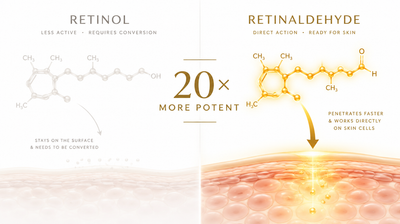
The truth is: the ingredient gap between drugstore retinol and prescription tretinoin has been hiding a third option — retinaldehyde. It's 20× more potent than retinol, but without the peeling, redness, and six-month "purging" phase. Korean skincare figured this out years ago.

Here are 7 reasons your current night cream is actually working against you — and what to do instead.

Your retinol is too weak to do anything meaningful

1. Your retinol is too weak to do anything meaningful

Most night creams use retinol — the weakest form of vitamin A. Your skin has to convert it twice before it can actually use it: retinol → retinaldehyde → retinoic acid. By the time that conversion happens, you've lost most of the potency.

That's why you've been using your retinol serum for months and your fine lines look exactly the same. It's not your fault — the ingredient was never strong enough.

Retinaldehyde only needs one conversion step, making it up to 20× more effective than retinol at boosting cell turnover. Same family, completely different results.

Prescription retinoids are effective — but they destroy your barrier

2. Prescription retinoids are effective — but they destroy your barrier

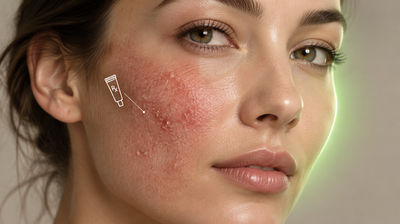
Tretinoin works. Nobody disputes that. But it works by overwhelming your skin — forcing cell turnover so aggressively that redness, peeling, and irritation are considered "normal."

For anyone with sensitive skin, rosacea-prone skin, or a compromised barrier, prescription retinoids are a gamble. And you need a dermatologist visit (plus $80+ a month in Canada) just to try.

Retinaldehyde delivers clinical-grade results without the barrier damage. Studies show comparable improvements in texture and fine lines, with significantly less irritation.

You're using one product where you need two mechanisms

3. You're using one product where you need two mechanisms

Anti-ageing isn't just about cell turnover. Your skin also needs collagen stimulation, barrier repair, and hydration — all at the same time. A single retinol serum can't do all of that.

This is why Korean skincare labs developed dual-action systems. Instead of layering five products and hoping they don't cancel each other out, a two-cream system lets each half target a different mechanism — one for renewal, one for repair.

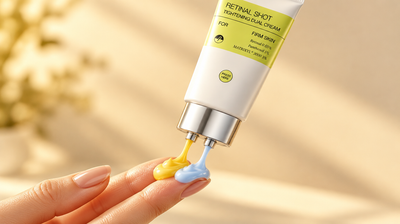
The yellow cream handles retinaldehyde + peptides. The blue cream handles panthenol + niacinamide. One push dispenses both. No guessing, no layering mistakes.

Your collagen is declining and your night cream isn't addressing it

4. Your collagen is declining and your night cream isn't addressing it

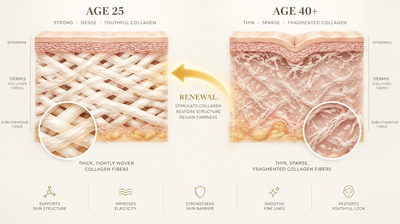
After 25, collagen production drops roughly 1% per year. That's the real reason your skin loses firmness and starts to sag — not because you're not moisturising enough.

Most night creams don't contain peptides at meaningful concentrations. The ones that do charge you $60+ for a peptide serum you apply separately.

Matrixyl 3000 at 3% concentration — the peptide complex in the yellow cream — is clinically shown to stimulate collagen synthesis. It's working on the structural damage while the retinaldehyde handles the surface.

The "purging period" is a design flaw, not a feature

5. The "purging period" is a design flaw, not a feature

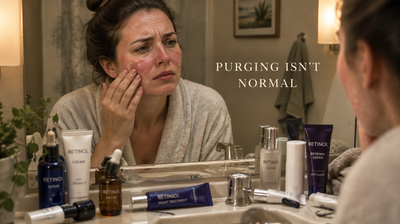
Ever been told that breakouts, flaking, and redness when starting retinol are "your skin adjusting"? That's partially true — but it's also a sign the formula is too harsh for your skin's repair capacity.

When you strip the barrier faster than it can rebuild, you get inflammation. Inflammation triggers breakouts. And then you're told to push through.

5% panthenol in the blue cream actively repairs your barrier while the retinaldehyde works. It's the difference between tearing down a wall and rebuilding simultaneously, versus just tearing it down.

You're paying three times too much for weaker ingredients

6. You're paying three times too much for weaker ingredients

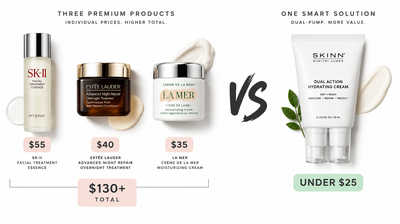
Medik8 Crystal Retinal is $55 CAD. The Ordinary's Retinal is cheaper but leaves out peptides and barrier support. COSRX's retinol is only 0.1% and needs a separate serum for hydration.

None of them combine retinaldehyde, Matrixyl 3000, panthenol, and niacinamide in one system. To replicate this stack from any Canadian brand, you'd need 3–4 separate products and $90+.

The Celimax A-Shot Dual Cream combines everything in one press — for under $25 CAD.

The fix: Celimax Vita-A Retinal Shot Tightening Dual Cream

7. The fix: Celimax Vita-A Retinal Shot Tightening Dual Cream

Yellow cream: 0.05% retinaldehyde + 3% Matrixyl 3000. Boosts cell turnover and stimulates collagen — the "renewal" half.

Blue cream: 5% panthenol + niacinamide. Repairs, hydrates, and strengthens your barrier — the "repair" half.

Press once, both creams dispense together. Apply, and your entire night routine is done in one step. No purging. No layering. No $90 serum stack.

Developed in Korean labs. Now available in Canada.

Get Your FREE GIFT Today!